Airbnb clone development: plan both sides of your rental marketplace
A rental marketplace needs a workable host experience as well as attractive guest search. Here is how to plan a distinct product around both.
 Altsoft Editorial TeamTravel platforms & systems integration
An Airbnb clone development enquiry is often really a request to build a vacation rental marketplace: guests discover stays, hosts manage listings, and an operator coordinates reservations and support. The opportunity is to create your own proposition for a particular audience, not to reproduce Airbnb's branding or imply a relationship with it.
The most useful planning exercise is to follow both sides of the marketplace. A guest needs confidence in the stay and booking terms. A host needs clear responsibilities, usable availability tools and a dependable way to understand their reservations. The operator needs to resolve the gaps between those two experiences.
Begin with a specific supply model
Will you onboard independent hosts, professionally managed apartments, hotel inventory or a combination? A single-home host and a multi-property operator may need different onboarding and management tools. Define the first supported model before building a large feature catalogue.
Decide which listing details are mandatory, who reviews new listings and how updates become public. Your operating policy should explain how the platform handles inaccurate information, guest complaints and unavailable stays. Software can support these decisions, but it cannot invent an accountable business process.
Use Roomshatch to discuss the journeys
Roomshatch is an Altsoft portfolio example for stays discovery and host participation. The public host-registration screen below makes the supplier-side entry point visible alongside the guest-facing experience.
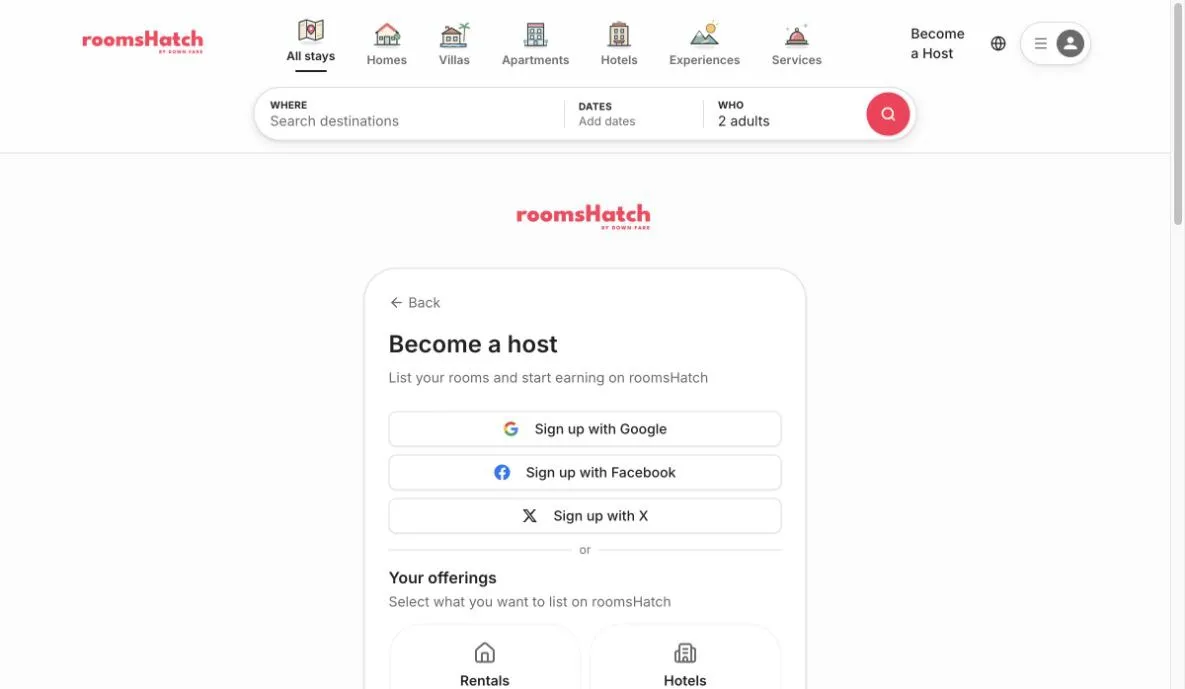
Roomshatch's public host-onboarding screen, captured on 9 November 2026. No account was created for this illustration.
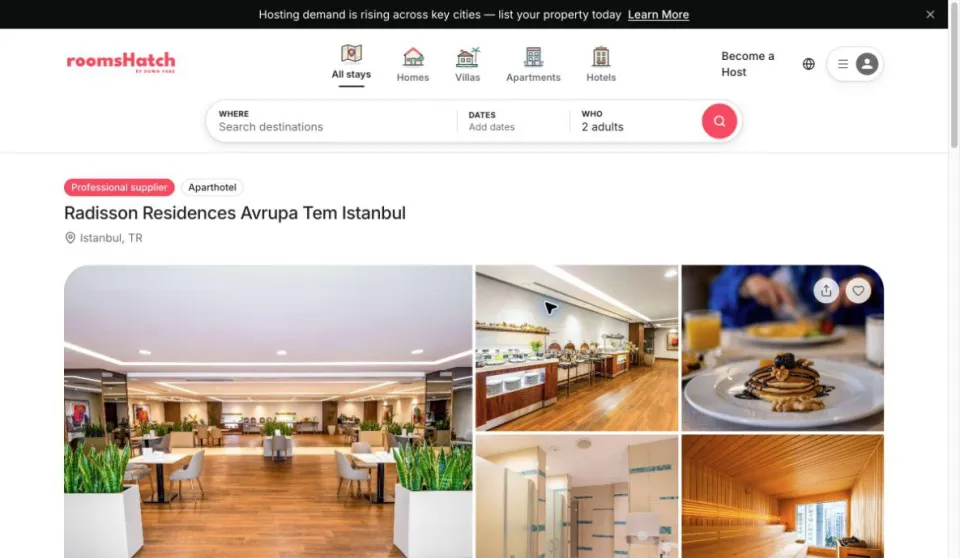
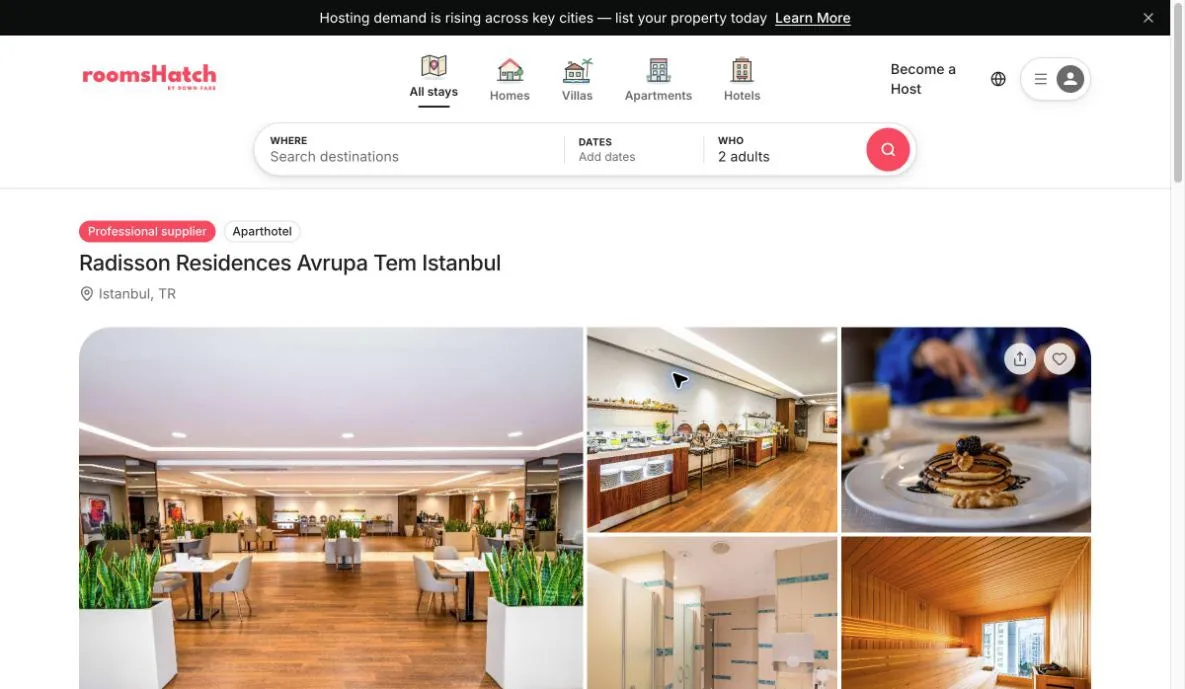
The featured property screenshot shows professionally supplied accommodation; it should not be mistaken for proof that every listing is independently hosted. The wider lesson is to make the source and management model of a stay clear to guests. View the current Roomshatch website for the public experience.
Define booking rules before drawing the calendar
Choose whether each supported property uses request-to-book, instant confirmation or another explicitly defined flow. Specify when dates are held, how long a request remains open and what happens when a host does not respond. These rules influence notifications, availability and customer expectations.
Work through a fictional booking with the operations team. A guest requests five nights, the host changes a restriction, and another channel receives an overlapping reservation. Which system has authority? Which action is allowed next? The answer should be testable before live customers depend on it.
Do not confuse a rental marketplace with an Airbnb connection
Your own marketplace can exist without being integrated with Airbnb. If you also need distribution or calendar synchronisation, confirm the supported access route and the precise data exchanged. Airbnb documents management through connected property-management software; that is separate from copying a guest-facing website.
Calendar feeds are also not a complete reservation-management integration. Airbnb's calendar-sync guidance describes periodic imported-calendar updates. Design around the actual update behaviour and supported fields, rather than promising instant synchronisation or guaranteed elimination of double bookings.
Build the host workspace and support queue
The host should be able to understand their listing status, upcoming reservations and actions awaiting a response. Operators need moderation, issue ownership, communication history and carefully scoped staff access. Clarify which notifications are essential to a reservation and which are optional marketing.
- Define who may edit descriptions, photos and availability.
- Show booking requests separately from confirmed reservations.
- Make the agreed fees and settlement rules understandable.
- Keep a trace of changes without exposing unnecessary guest data.
- Give support staff an escalation path for disputes and cancellations.
Payment collection and host settlement must follow the chosen provider's supported arrangement and your business's requirements. Do not assume an ordinary checkout integration also supplies a complete marketplace payout system.
Launch a manageable marketplace
Start with enough supported supply to test the experience meaningfully, then expand based on actual onboarding and support needs. Quality checks, helpful property information and responsive support are more valuable than empty categories. For the hotel-led alternative, read our hotel booking website guide.
Talk to Altsoft about your rental marketplace. Bring your target guests, initial host group, booking rules and integration needs. We can turn those decisions into a phased custom-platform specification with guest, host and operator acceptance checks.
Airbnb is referenced only to explain the marketplace category. No affiliation or endorsement is claimed.
Related resources
Services, project examples and practical guides.
Put these ideas to work.
Talk through your workflow with an Altsoft specialist and decide on your next step.