Booking.com clone development: a hotel website that can fulfil bookings
Hotel search is only the beginning. Plan the property data, rate rules, supplier handovers and support tools that make a booking website useful.
 Altsoft Editorial TeamTravel platforms & systems integration
A request for a Booking.com clone usually means a hotel booking website with searchable properties, room options, prices and reservations. Those are useful requirements, but they do not yet describe a functioning travel business. The platform also needs dependable inventory, understandable rate conditions and a team able to support the booking afterwards.
The goal should be an independently branded product for your market—not a copy of Booking.com's identity or content. This guide explains how to scope hotel booking website development using DownFare and Roomshatch as visible portfolio examples.
Decide how properties enter your platform
You may work directly with hotels, connect a contracted accommodation supplier, or combine several sources. Direct onboarding requires a process for property content, room types, availability and rates. Supplier inventory requires mapping your records to the supplier's identifiers and keeping the information current.
When sources overlap, decide how to recognise the same property without assuming that similarly named rooms are interchangeable. A double room, a refundable rate and a breakfast-inclusive offer describe different parts of a sellable option. Losing those distinctions makes comparison and servicing harder.
What the Roomshatch example makes visible
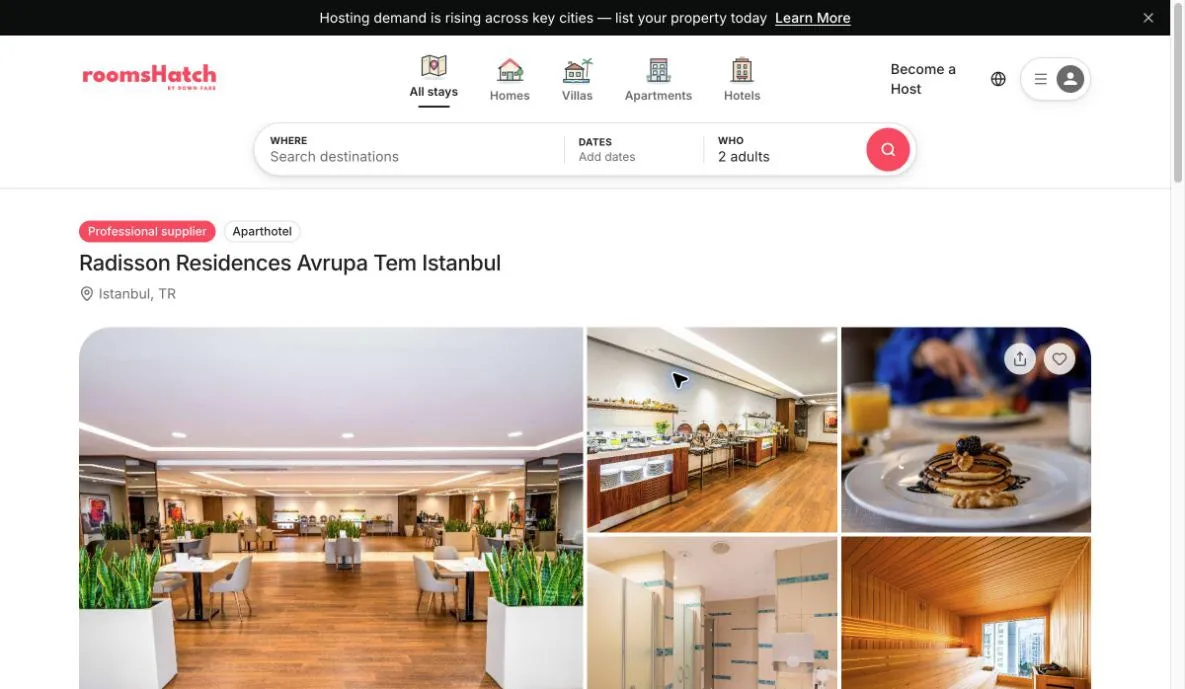
The Roomshatch portfolio example shows a property-detail page with accommodation type, location and a photo gallery. It is a useful reference for presenting information before asking a guest to select dates. The featured screenshot is a public interface capture from 9 November 2026, not a promise of current rates or availability.
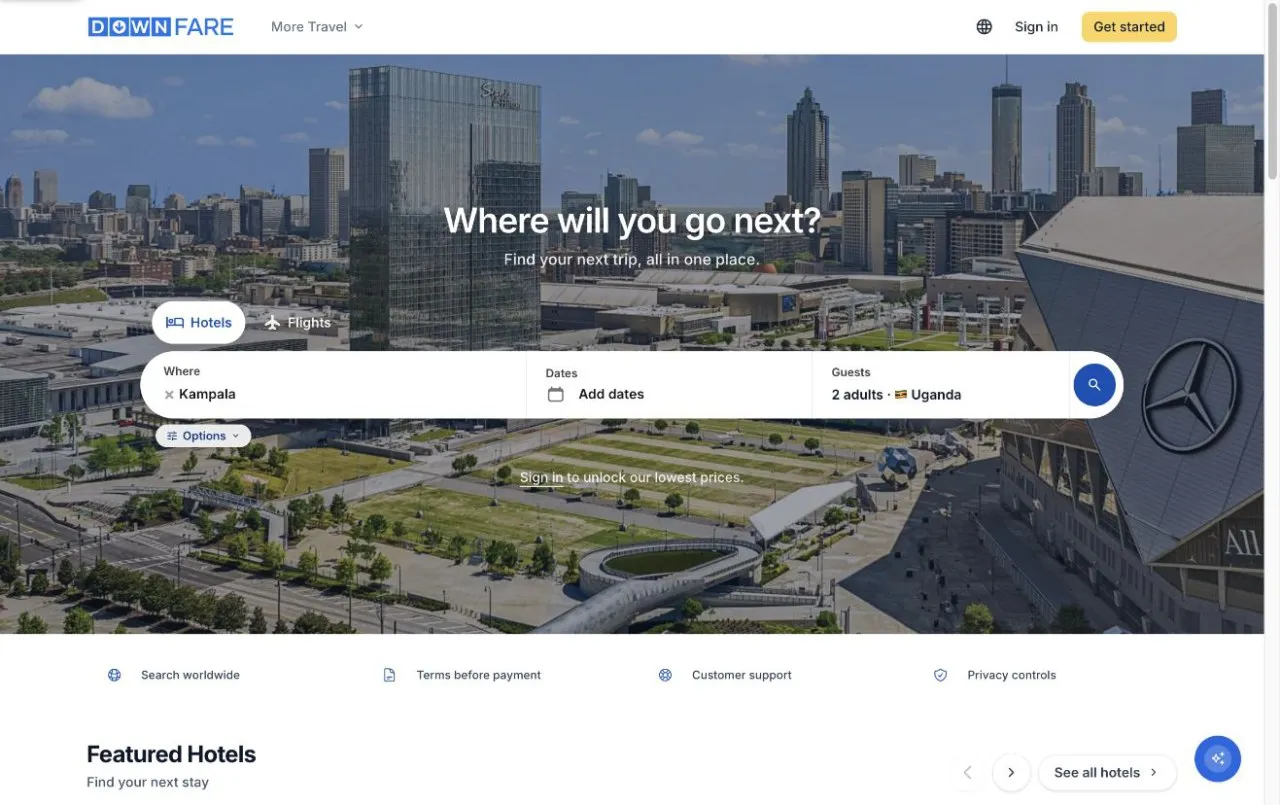
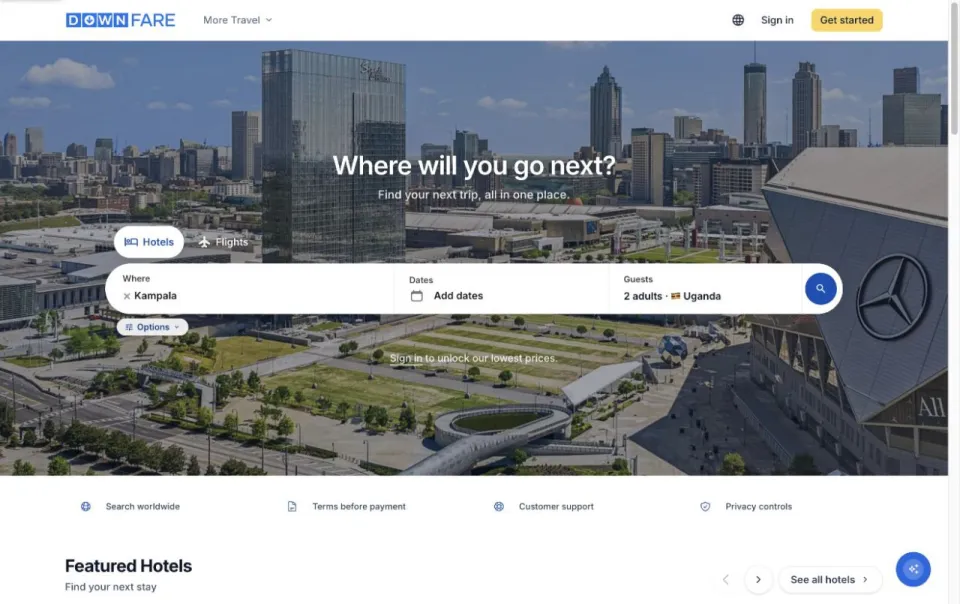
DownFare's public hotel-search interface, captured on 9 November 2026. The example illustrates search inputs, not an endorsement of a particular inventory supplier.
These two views belong to different stages of the journey. Discovery helps someone decide where to look; a property page explains what the stay is. Your implementation brief should cover both without treating a displayed property as a confirmed reservation.
Match room offers to the actual guest request
Dates, number of rooms, adults and children's ages can change which offers are suitable. Plan these inputs before designing the results cards. Explain whether the displayed price covers one night, the entire stay, one room or the full party. Preserve the supplier's applicable taxes, payment timing and cancellation information through to checkout.
Use a clear choice summary immediately before the customer proceeds: property, room, board basis, guest composition, dates, currency, total and important restrictions. If the selected rate changes, ask the customer to review the revised offer rather than silently accepting a different amount.
Choose the correct type of Booking.com integration
Building a similar product does not automatically give you access to Booking.com's inventory. Its Demand API supports travel-content and booking-related flows according to the service and partner access. Its Connectivity APIs address the property-management side, including connections between accommodation software and Booking.com. These are different integration purposes.
Ask whether your business needs to sell inventory to travellers or manage properties across distribution channels. Put the required access and commercial approval into the brief. Do not purchase a development package assuming that either connection is automatically included.
Test confirmation, cancellation and support
A production acceptance test should go beyond a successful search. Use supplier-approved test scenarios to verify confirmation, retrieval and cancellation behaviour. Check that the customer receives the correct reference and that the support team can locate the same record.
- What happens if a rate disappears before confirmation?
- How is an uncertain supplier response investigated?
- Which cancellation conditions did the customer see and accept?
- Can an agent distinguish a cancellation request from a completed cancellation?
- How are payment and refund outcomes reconciled with the reservation?
These questions are implementation acceptance criteria. They should be answered for the selected supplier and payment arrangement, rather than copied from another hotel's policy.
Give buyers a reason to choose your platform
A niche, service model or better-supported journey can be more useful than a very large undifferentiated catalogue. Describe the customers you serve and how they can reach support. Use accurate property content, accessible images and focused navigation. For the wider business-model decisions, see our travel-platform planning guide.
Prepare your hotel booking website brief
Send Altsoft your inventory model, target markets, sample room-rate rules and preferred payment approach. We can scope the website and administration experience alongside the supplier integration. Discuss your hotel booking platform and request a walkthrough of the relevant portfolio examples.
Booking.com is used as a descriptive reference. No affiliation, endorsement or automatic access to its services is claimed.
Related resources
Services, project examples and practical guides.
Put these ideas to work.
Talk through your workflow with an Altsoft specialist and decide on your next step.